Kraft Box Dividers Slotted to Fit Your Box
Slotted kraft partitions turn one open box into a grid of separate cells. We cut the strips to your box and your item, and can supply the outer box with them if you need both.
Written price from£0.25 a box
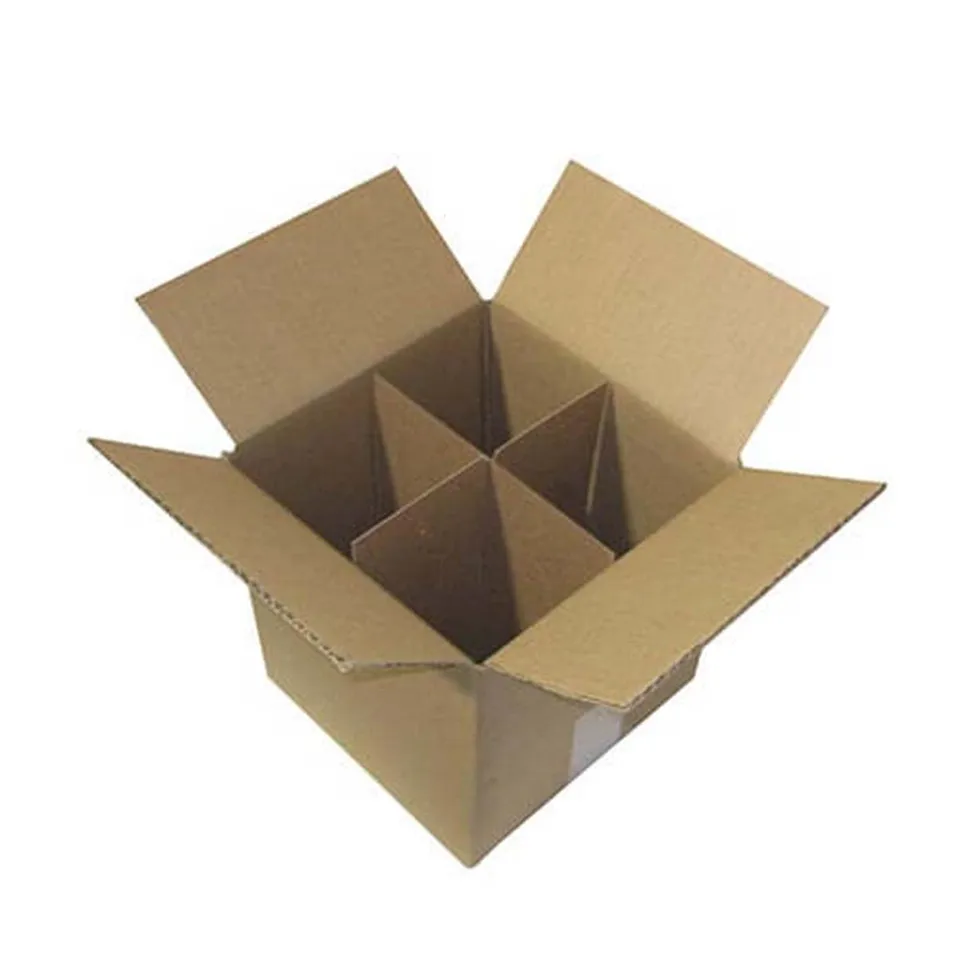
What are kraft box dividers?
Kraft box dividers are strips of brown board with slots cut halfway through, so they interlock into a grid of cells. They keep jars, bottles, small parts and sweets apart inside a box. They arrive as flat strips and slot together by hand.
- Build
- Interlocking slotted strips forming a grid
- Cells
- 4, 6, 12, 24 or any count you need
- Outer box
- Supplied with a matching box on request, or cut to fit yours
- Arrives
- Flat strips, packed in sets
Kraft Box Dividers Sizes
| Size | Typical inside size | Fits |
|---|---|---|
| 4 cell | 200 × 200 × 150 mm | Jars, bottles |
| 6 cell | 300 × 200 × 150 mm | Bottles |
| 12 cell | 400 × 300 × 150 mm | Small jars |
| 24 cell | 400 × 300 × 60 mm | Small parts, sweets |
Sizes are typical starting points, not stock sizes. Every box is cut to the inside size you send.
What are slotted dividers used for?
Dividers stop items touching. That is the whole job, and it solves a surprising number of problems for small businesses.
Jam and pickle makers use them to keep jars apart in a carton. Gift shops use a shallow grid to display small items in a tray. Workshops keep screws, beads or spare parts sorted in a 24 cell grid. Bakers use a four cell divider in a lid-and-base box to keep different treats apart.
You will find them in our inserts and dividers for kraft boxes range with bottle packs and bin boxes.
How do slotted dividers fit together?
Each strip has slots cut halfway down its height. One set of strips runs lengthways with the slots facing up; the other runs across with the slots facing down. Push them together and they lock into a grid.
One of our photos shows exactly this: loose strips stood beside a box, and the same strips locked into a twelve cell grid inside it. No glue, no tape, and the grid lifts out in one piece.
- Lay the long strips side by side with the slots pointing up.
- Drop the short strips onto them with their slots pointing down.
- Press down evenly until the tops line up.
- Lower the finished grid into the box and square it against the walls.
How many cells do you need?
Count how many items go in each box, then decide on rows and columns. Six jars could be two rows of three or one long row; the box shape changes with each layout.
The starting sizes below are inside box sizes. They are a guide, not stock sizes.
| Grid | Box inside size (mm) | Typical contents |
|---|---|---|
| 4 cell | About 200 × 200 × 150 | Four jars or bottles |
| 6 cell | About 300 × 200 × 150 | Six bottles in two rows |
| 12 cell | About 400 × 300 × 150 | Small jars, candle tins |
| 24 cell | About 400 × 300 × 60 | Small parts, wrapped sweets |
How tall should a divider be?
For jars and bottles, the dividers usually come up to the shoulder or a little higher, so the glass cannot tip and touch its neighbour. They do not need to reach the very top.
For a shallow display tray, like the many-celled tray in our photos, the dividers run almost the full depth so each item sits in its own pocket.
Tell us the height of the item and the height of the box. We usually set the dividers a little below the box top so the flaps fold flat over them.
Which board are the dividers made from?
Most dividers are cut from brown kraft corrugated, which stands upright well and gives each cell a firm wall. For small, light items in a gift box, brown kraft folding board makes a thinner, neater grid.
We suggest the board when we see your items. Other corrugated grades and white-lined kraft are available on request.
Brown kraft also hides the light marks that glass leaves as it slides into a cell. A grid that has been used a few times still looks tidy.
Can you make the outer box as well?
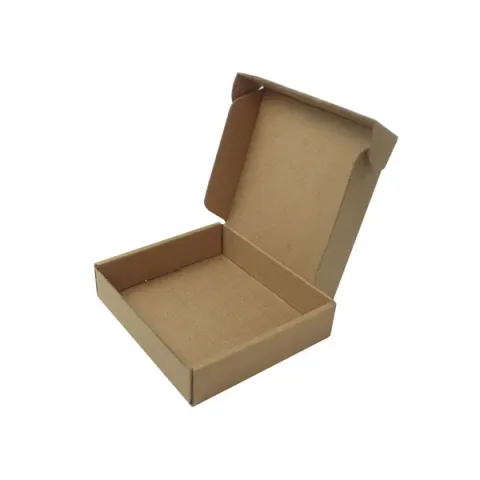
Yes. We can make a plain or printed shipping box sized to the grid, or a lid-and-base box for a retail set. Ordering both together means the grid and box are cut to match each other.
If you already have boxes, send their inside size. We cut the dividers to fit with a little clearance so the grid drops in without forcing.
- Regular shipping cartons with top and bottom flaps
- Lid-and-base boxes for gift sets
- Shallow open trays for display
- Your existing boxes, if you send the inside size
Do dividers need printing?
Most are left plain brown. They sit inside a box and their job is practical.
Plain strips also let you reuse the same grid for different products without a mismatched design showing.
A printed grid makes sense in a gift box or a display tray, where the customer sees the cells. A simple one-colour pattern or a number in each cell works well on kraft. If you are new to printing on brown board, our guide to printing black, white and colour ink on kraft explains how inks look.
What are the common divider mistakes?
A divider order goes wrong in a few predictable ways.
- Measuring the outside of the box instead of the inside
- Cell size taken from the jar body, not its wider lid
- Ordering dividers taller than the box, so the flaps will not close
- Using one grid for two jar sizes, so the smaller jars rattle
- Forgetting room for wrapping if items are sleeved before packing
Can dividers organise a stockroom or a workbench?
Yes, and this is where the shallow grids earn their keep. A 24 cell tray on a shelf keeps buttons, findings, labels or spare fixings sorted by type, and each cell can carry a small label.
Jewellery makers and repair workshops use them as open trays on the bench. Shops use the same trays under the counter for small stock that would otherwise end up in a jumble.
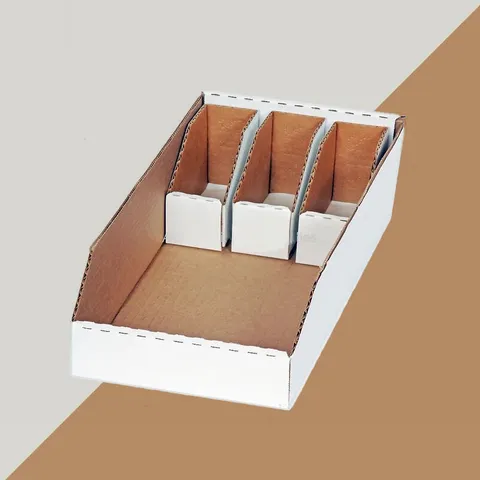
If you want something that stands upright on a shelf and opens at the front, look at bin boxes instead. Divider trays suit drawers and flat shelves where you look down into the cells.
Packing with dividers day to day
Build a stack of grids before a big packing session. They lift in and out of boxes easily, and a pre-built grid saves a lot of fiddling at the bench.
Load cells from the far corner towards you so you do not reach over packed items. Close the box flaps over the top of the grid and tape as usual.
Flat strips store in very little space, so keep spares on a shelf for busy weeks.
How do I order kraft box dividers?
Tell us the inside size of your box or the size you want us to make, the item size, the number of cells and the quantity. Let us know whether you want the outer box too.
We reply with a written quote; plain dividers start from £0.25 per unit for small grids. Your free proof draws every strip and slot, and revisions are unlimited.
Production takes 4–6 business days after approval, and free tracked delivery reaches any UK address in 2–3 business days. If something arrives damaged, misprinted or the wrong size, photos within 10 days get it reprinted or refunded.
Related Kraft Boxes
All inserts and dividers boxes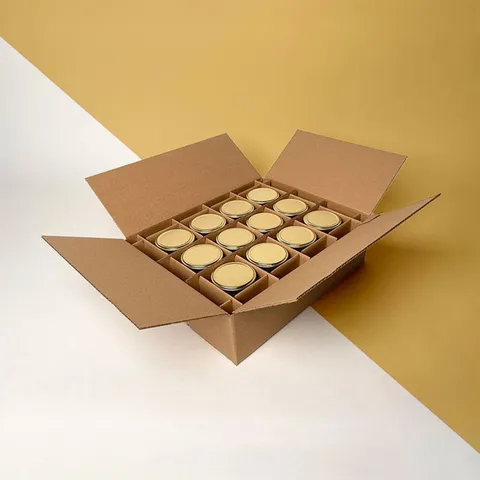 Kraft Bottle and Jar PacksGlass jars and bottles in transitMade to size · from £0.25Price this box
 Kraft Bin BoxesShelves, stockrooms and countersMade to size · from £0.25Price this box
 Kraft Shipping BoxesStock, bulk and heavier ordersMade to size · from £0.25Price this box
 Kraft Mailer Boxes with InsertsKits, sets and fragile itemsMade to size · from £0.25Price this box
12questions answered
Questions About Kraft Box Dividers
Straight answers from the people who cut and print the boxes. Open any question to read the reply.
Do kraft box dividers come assembled?
No. They arrive as flat slotted strips packed in sets. Slotting one grid together takes under a minute.
Can you cut dividers to fit boxes I already have?
Yes. Send the inside length, width and height of your box, and the size of the items, and we cut a grid to suit.
How many cells can a divider grid have?
As many as fit. Four, six, twelve and twenty-four are common, but we can cut any grid from your box and item sizes.
Should dividers be the full height of the box?
Not always. For jars and bottles they usually reach the shoulder. For a shallow display tray they run almost the full depth.
Can dividers have cells of different sizes?
Yes. We can space the slots unevenly so one row takes bottles and another takes smaller jars.
Can I get a printed divider grid?
Yes. One-colour print on the strips works well in a gift box or display tray where the cells are on show.
Will the divider grid lift out of the box?
Yes. Once the strips are slotted together, the grid lifts out in one piece and drops back in again.
Do you make a lid-and-base box with dividers inside?
Yes. A lid-and-base kraft box with a four or six cell grid is common for treats and gift sets.
What if my jars have wider lids than bodies?
Measure the widest point, usually the lid, and we size each cell from that so jars drop in easily.
Can the dividers go into a shipping carton?
Yes. Dividers inside a corrugated carton are a common way to send several jars or bottles in one parcel.
Is there a difference between dividers and an insert?
Dividers are slotted strips that form open cells. An insert is a single cut piece with shaped cut-outs, which suits kits of mixed items.
Will my proof show where the slots go?
Yes. The proof shows each strip with its slot positions and the finished grid, so you can check the layout.
Tell us what you ship
Send the product, a rough size and a quantity. We reply in writing within one business day with a price and a free design proof. Prefer to talk? Call +44 7578 382054 or message us on WhatsApp.