Kraft Board Explained: Brown, White-Lined and Corrugated
By the team at The Kraft Boxes ·
Every kraft box starts as one of a few board types, and the one you pick changes how the box folds, prints and travels. This guide walks through each grade with typical numbers so you can ask for the right one.
What is kraft board?
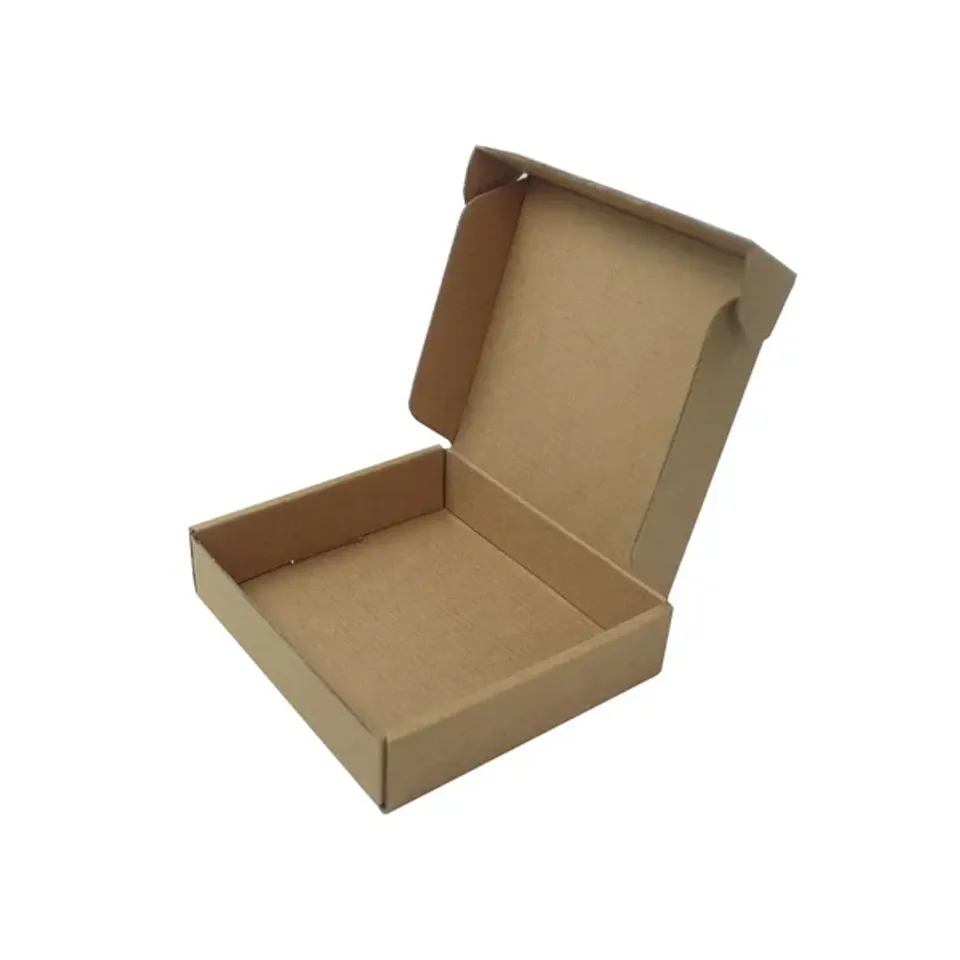
Kraft board is paperboard made mostly from unbleached wood pulp. Skipping the bleaching step leaves the fibres brown, with small darker flecks you can see up close.
The fibres are long, so the sheet feels tough and slightly toothy under your thumb. That rough face also hides the light scuffs a box picks up in a stockroom or a postbag.
Every box we make starts from one of two families: flat folding kraft board, or corrugated board with kraft liners on the outside. Which family you need depends far more on how the box travels than on how it looks.
Folding kraft or corrugated kraft: what is the difference?
Folding board is a single solid sheet. It scores and folds cleanly, so tuck flaps lock neatly and corners stay sharp. It is the board behind most shelf cartons, sleeves and pillow boxes.
Corrugated board is a sandwich. A wavy paper called the flute sits between two flat liners, and that air gap gives the board its spring and cushioning.
The table below shows the grades people ask about most, with figures that are common across the trade. Treat them as a rough guide rather than a fixed specification.
| Board | Typical build | Rough thickness | Where it usually goes |
|---|---|---|---|
| Brown folding kraft | One solid sheet, about 300–400 gsm | 0.4–0.6 mm | Soap, tuck, pillow and candle boxes |
| White-lined folding kraft | Brown back with a white top layer, similar gsm | 0.4–0.6 mm | Skincare cartons and full colour retail print |
| E flute corrugated | Kraft liners on a fine, close flute | About 1.5 mm | Mailer and clothing boxes |
| B flute corrugated | Kraft liners on a taller flute | About 3 mm | Shipping cartons and larger mailers |
| Double wall (BC flute) | Two flutes and three liners | About 6–7 mm | Stock moves and bulk orders |
We name the board for your box on the written quote. Grades outside brown folding kraft and brown corrugated are available on request.
What does gsm mean on a kraft box?
gsm stands for grams per square metre. It tells you how much one square metre of the sheet weighs, which roughly tracks how thick and stiff it feels.
On folding kraft, around 300 gsm is a common pick for flat, light items such as tea sachets or a slim soap bar. Around 350 gsm is a middle choice for jars and bottles in a tuck carton. Nearer 400 gsm feels firm for tall cartons and fitted lids.
Corrugated board is rarely sold by one gsm figure, because it is built from several papers glued together. People describe it by flute size and wall count instead.
Which flute suits a mailer or shipping box?
Flute letters describe the height of the wave inside the board. A smaller wave gives a flatter, smoother face. A taller wave gives more room between the liners and more give when the box is knocked.
- E flute: the usual choice for printed mailers and clothing boxes, because logos and fine text sit on a flatter face.
- B flute: a common start for plain cartons and bigger mailers carrying heavier, bulkier contents.
- F or micro flute: very thin corrugated for small retail boxes that need more body than folding board, available on request.
- Double wall: two flutes for stock moves, archive boxes and bulk orders, usually left plain or printed in one colour.
If you picture a plain brown carton on a warehouse shelf, you are picturing B flute. Our plain brown kraft shipping boxes start from that grade and move up when the contents call for it.
Should you choose brown or white-lined kraft?
Plain brown kraft shows the same brown outside and inside. White-lined kraft adds a bleached white layer to one face, while the other face stays brown.
Go white-lined when you want full colour artwork to look close to your screen, or a bright white inside when the lid lifts. Stay with brown when the natural look is part of your brand and the print is one or two inks.
A popular mix is brown outside and white inside. The box looks plain and honest in the post, then opens onto a clean white surface. White-lined board is available on request, so mention it on your brief.
Ink behaves very differently on each face. Our guide to printing on kraft boxes shows how colours shift on brown and when a white underprint helps.
How does the board change folding and finishing?
Folding board takes a crisp crease, so tuck flaps click shut and fitted lids sit square on the base. That neat edge is why most shelf cartons use it.
Corrugated folds along a pressed crease, leaving a slightly rounded edge. On E flute you barely notice it. On B flute the round is clear, which suits a carton but can look soft on a gift mailer.
Kraft takes embossing and debossing nicely because the fibres compress into the shape. Foil works too, though lines finer than about 0.5 mm can break up on the rough face. Keep foiled text at about 8 pt or larger.
Die-cut windows come out cleaner in folding board. On corrugated, keep a window edge at least 10 mm away from any fold so the flute does not crush at the corner.
How do you pick a board in six steps?
- Measure the product and note roughly how heavy and how fragile it is.
- Decide whether the box travels alone through the post or rides inside an outer carton.
- If it travels alone, start with corrugated: E flute for printed mailers, B flute for plain cartons.
- If it sits on a shelf or inside an outer, start with folding kraft at around 350 gsm.
- Decide whether full colour or a white inside matters to you. If it does, ask for white-lined board.
- Send the details for a quote, and we suggest a board that you then see named on the free proof.
Most shelf cartons land on folding board in that list. Our kraft tuck boxes for bottles and tea are a good example of where 350 gsm folding kraft usually sits.
Why does kraft look different between batches?
Unbleached fibre is a natural material, so the shade moves a little between paper runs. One batch can lean towards light tan and the next towards a deeper, warmer brown, with more or fewer flecks.
This is normal for kraft and is part of its look. If matching the shade across reorders matters, tell us before printing so we can note it on your order.
The difference shows most when two board types sit side by side. A folding carton inside a corrugated mailer will rarely be the exact same brown. The liner paper and the carton board come from different stock.
What board mistakes do buyers make most often?
The first is putting a glass jar in a folding carton and posting it on its own. Folding board looks lovely on a shelf, but on its own it does not cushion like corrugated. A carton inside a mailer, or a corrugated box with an insert, is the safer route.
The second is choosing B flute for a mailer with fine print. The ink can pick up the ridges of the flute underneath, a stripy effect often called washboarding. E flute avoids most of it.
The third is expecting full colour on brown board to match a screen. It never quite will, and that is a print question rather than a board fault. Our kraft mailer boxes for posting orders show how simple one-colour logos sit happily on brown corrugated.
How do you ask for the right board?
Tell us three things: what goes in the box, how it travels, and how you plan to print it. A product photo and the inside size in millimetres help even more.
We reply with a written quote that names the board, with prices from £0.25 per unit. A designer then lays your logo onto the box plan at no charge, and you can ask for as many changes as you like.
Once the proof is signed off, cutting and printing take 4–6 business days. The flat boxes then reach any UK address in 2–3 business days on free tracked delivery. When you are ready, request a written kraft box quote and mention any board you already have in mind.
Boxes Mentioned in This Guide
 Kraft Shipping BoxesStock, bulk and heavier ordersMade to size · from £0.25Price this box
 Kraft Mailer BoxesPosting orders and giftsMade to size · from £0.25Price this box
 Kraft Tuck BoxesBottles, tea and small goodsMade to size · from £0.25Price this box
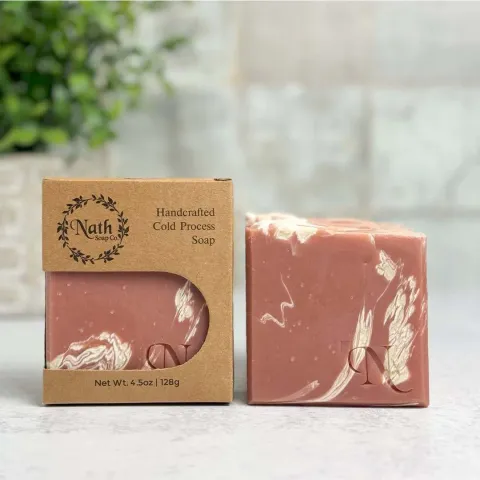 Kraft Soap BoxesHandmade soap barsMade to size · from £0.25Price this box
12questions answered
Questions About This Guide
Straight answers from the people who cut and print the boxes. Open any question to read the reply.
Is kraft board the same thing as cardboard?
Cardboard is a loose everyday word for any thick paper packaging. Kraft board is a specific type made from unbleached pulp, which is why it stays brown, and it comes as folding board or as corrugated.
What gsm is usual for a kraft soap box?
Folding kraft somewhere around 300 to 350 gsm is a common choice for a single soap bar. We suggest the grade on your written quote once we know the bar size.
Is E flute or B flute better for a printed mailer?
E flute is usually better when print matters, because its flatter face shows logos and small text cleanly. B flute suits plain cartons and bulkier contents.
Can a kraft box be brown outside and white inside?
Yes, ask for white-lined kraft, which we offer on request. The brown face usually goes outside with the white face lining the inside of the box.
Why is my new batch of kraft boxes a slightly different brown?
Unbleached fibre varies a little between paper runs, so the shade can move between tan and deeper brown. Tell us before printing if shade matching across orders matters to you.
Does a thicker kraft board always make a better box?
Not always. Thicker board can make small cartons hard to fold neatly and adds bulk to every box, so the right grade is the one that fits the product and how it travels.
Can corrugated kraft have a die-cut window?
Yes, as an option. Windows cut more cleanly in folding board, and on corrugated we keep the window edge well clear of the folds.
Is double wall kraft worth it for a small online shop?
For most small parcels it is more than you need. Double wall suits stock moves and bulk orders, while single wall E or B flute covers the usual shop order.
Can you emboss or deboss brown kraft board?
Yes, embossing and debossing are options and kraft takes them well because its fibres press into shape. Very fine detail is best avoided on the rougher face.
Will kraft boxes show scuffs after posting?
Brown kraft hides light scuffs better than glossy white board because of its colour and slightly rough face. Deep dents and crushed corners will still show.
What is micro flute kraft?
Micro flute, sometimes called F flute, is a very thin corrugated board. It gives small retail boxes more body than folding board and is available on request.
Which board will you suggest if I am unsure?
Send the product, its inside size and how it travels, and we name a board on the written quote. You see it again on the free proof before anything is printed.
Tell us what you ship
Send the product, a rough size and a quantity. We reply in writing within one business day with a price and a free design proof. Prefer to talk? Call +44 7578 382054 or message us on WhatsApp.